A leaning or cracking retaining wall after winter can indicate freeze-thaw damage, drainage problems, or shifting soil. In Chester County, Pennsylvania, freezing temperatures and melting snow can put additional pressure on retaining walls, causing cracks, movement, and structural instability. While minor damage may be repairable, significant leaning or foundation problems often require rebuilding to restore long-term stability.
Understanding what causes retaining wall failure and recognizing the warning signs early can help you determine whether repairs are sufficient or a complete replacement is the better investment.
How Freeze-Thaw Cycles Damage Retaining Walls
Pennsylvania winters can be tough on retaining walls, especially when moisture collects in the surrounding soil. As water freezes, it expands, potentially contributing to soil movement and increased pressure against the structure. Repeated freezing and thawing can gradually weaken an already vulnerable wall, particularly if it has existing cracks or an inadequate foundation.
Several conditions contribute to retaining wall freeze-thaw damage:
- Frost heave: Freezing moisture in susceptible soil causes expansion and movement that can shift wall sections.
- Soil saturation: Wet soil increases the pressure behind a retaining wall, especially when drainage is inadequate.
- Foundation movement: Repeated freezing and thawing can contribute to uneven settlement or shifting.
- Existing cracks: Water entering openings in masonry or concrete can freeze, expand, and worsen deterioration.
Walls built with unsuitable backfill, inadequate drainage, or foundations that are not appropriate for local frost conditions may be more vulnerable to winter damage. For additional information on how local soil conditions affect outdoor structures, explore our guide to retaining walls, patios, and drainage in Chester County.
Warning Signs Your Retaining Wall May Be Failing
Not every crack indicates serious structural damage, but visible movement should never be ignored. Some problems develop gradually as soil pressure increases, while others become noticeable after a particularly wet or cold winter. Identifying these changes early can help prevent further damage and reduce the risk of sudden wall failure.
Look for these common warning signs:
- Leaning or tilting: The wall starts moving outward from its original position.
- Bulging sections: Portions of the wall push outward under pressure from the soil behind them.
- Widening cracks: Cracks grow larger or extend across multiple blocks or wall sections.
- Separating materials: Gaps develop between stones, blocks, or adjoining wall sections.
- Soil erosion: Soil washes away around the foundation or behind the wall.
- Uneven settlement: Sections of the wall sink or shift at different rates.
A leaning retaining wall is especially concerning because it may indicate that the structure is losing its ability to resist soil pressure. If the wall continues shifting, develops significant bulging, or has loose materials that could fall, keep people away from the affected area and arrange a professional structural assessment before attempting repairs.
Why Drainage Problems Cause Retaining Wall Failure
Poor drainage is one of the most common contributors to retaining wall damage. When rainwater or melting snow accumulates behind a wall, hydrostatic pressure builds against the structure, placing additional stress on its foundation and materials. Over time, this pressure can contribute to cracks, outward movement, and structural instability.
Unlike winter-related frost movement, retaining wall drainage problems can continue throughout the year. Heavy rainfall, poorly directed downspouts, and inadequate drainage systems can repeatedly saturate the soil behind the wall, making existing problems worse.
Depending on your property’s conditions, effective drainage solutions may include:
- Perforated drainage pipes: Collect water behind the wall and direct it toward an appropriate outlet.
- Free-draining gravel backfill: Allows water to move more easily toward the drainage system.
- Proper grading: Directs surface runoff away from vulnerable areas.
- Drainage outlets: Allow collected water to escape rather than accumulate behind the structure.
Addressing drainage problems is an important part of any lasting retaining wall solution. Simply repairing visible cracks without correcting excess water pressure may allow the same damage to return. Our professional drainage installation services can help manage runoff and improve water movement around outdoor structures.
Retaining Wall Repair vs. Rebuild: Which Is the Better Option?
Determining whether a damaged retaining wall should be repaired or rebuilt depends on its structural condition, the extent of movement, and the underlying cause of the damage. A wall with minor surface deterioration may only need targeted corrections, while one with significant leaning or foundation instability could require complete reconstruction. The goal is to choose a solution that addresses both the visible damage and the problems causing it.
When Retaining Wall Repair May Be Enough
Retaining wall repair may be appropriate when the damage is limited and the structure remains stable. Small surface cracks, isolated loose blocks, or localized drainage issues can sometimes be corrected without removing the entire wall. However, the condition of the foundation and surrounding soil must also be considered before deciding whether repairs are practical.
Repairs should resolve the underlying cause rather than simply improve the wall’s appearance. Filling cracks will not correct excessive soil pressure, and resetting loose blocks may provide only temporary improvement if the foundation continues shifting. A professional assessment can help determine whether the wall is suitable for localized repairs.
When Rebuilding Is the Better Option
Rebuilding may be necessary when a retaining wall has experienced substantial leaning, widespread structural cracking, or foundation movement. These conditions can indicate that the wall is no longer adequately supporting the soil behind it. Walls with recurring problems after previous repairs may also benefit from reconstruction rather than additional temporary fixes.
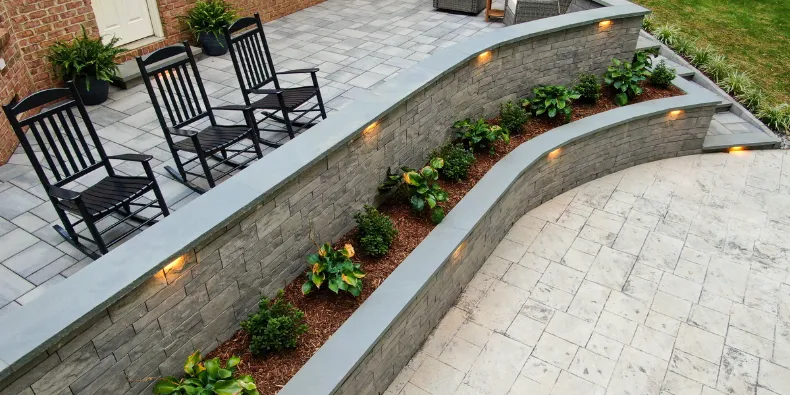
A new retaining wall provides an opportunity to correct the original design or installation problems. This may involve improving the foundation, using suitable backfill materials, and incorporating drainage features that reduce water pressure. Charlestown Landscaping provides professional retaining wall installation for property owners throughout Chester County.
Repair vs. Rebuild: Quick Comparison
| Wall Condition | Potential Solution |
| Minor surface cracks without movement | Localized repair |
| A few loose blocks on an otherwise stable wall | Targeted repair |
| Drainage problems without structural displacement | Drainage correction |
| Noticeable leaning or outward bulging | Structural assessment, potentially rebuilding |
| Major cracks or foundation movement | Partial or complete rebuilding |
| Recurring structural problems after repairs | Rebuilding with underlying corrections |
A professional evaluation is essential before making a final decision. Taller retaining walls, walls supporting driveways or nearby structures, and walls showing significant movement may require assessment by a qualified structural engineer to determine the safest solution.
How to Prevent Retaining Wall Damage After Winter
Regular maintenance can help extend the lifespan of a retaining wall and reduce the likelihood of future problems. Early spring is an ideal time to inspect the structure because winter-related movement and drainage issues may become more noticeable once the soil begins to thaw. Addressing minor concerns before another season of heavy rainfall can help limit additional deterioration.
Follow these preventive steps:
- Inspect your wall each spring: Check its alignment and look for new cracks, loose materials, or visible movement.
- Keep drainage outlets clear: Remove leaves, sediment, and debris that could restrict water flow.
- Redirect excess runoff: Make sure downspouts and surface water are not discharging directly behind the wall.
- Avoid excessive loads: Keep heavy equipment, stored materials, and additional soil away from the top of the wall unless it was designed to support them.
- Address problems promptly: Schedule an assessment when cracks widen, sections shift, or water repeatedly collects around the structure.
Preventive maintenance is particularly valuable for properties with sloped terrain, where runoff and erosion can place additional stress on retaining walls. If you are considering improvements beyond an existing wall, our landscape design and installation services can help you plan outdoor features that account for grading, drainage, and overall property layout.
Get Reliable Retaining Wall and Drainage Solutions in Chester County
A damaged retaining wall can affect your property’s appearance, drainage, and stability, especially when winter conditions have caused significant movement. Whether you’re dealing with recurring drainage issues or considering the replacement of an aging wall, identifying the underlying problem is the first step toward a lasting solution. Addressing these concerns early can also help protect nearby landscaping, walkways, and other outdoor features.
At Charlestown Landscaping, we provide professional retaining wall installation, hardscaping, and drainage solutions for residential and commercial properties throughout Chester County. Our team can help you plan a retaining wall project that considers your property’s slope, soil conditions, and water management needs. Contact us today to discuss your retaining wall project and request a free consultation.