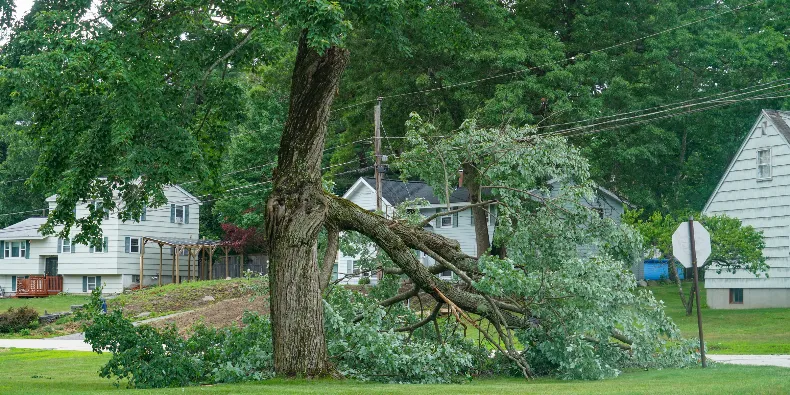
Winter storms can leave trees with broken branches, cracked trunks, or serious structural damage. If you’re dealing with ice storm tree damage, the first step is to stay clear of hazardous areas, check for downed power lines, and contact a professional if the tree threatens your home or property. Knowing what to do immediately, when to request emergency tree service, and how to document the damage can help you stay safe and avoid further problems.
How Ice and Heavy Snow Can Damage Trees
Ice and snow add considerable weight to branches, especially during freezing rain and wet snowfall. This extra weight can cause limbs to bend, split, or break, sometimes without warning. Trees with existing weaknesses are particularly vulnerable to winter storms.
Common types of winter tree damage include:
- Broken branches: Heavy snow and ice cause limbs to snap or hang dangerously.
- Split trunks: Weak branch unions or existing cracks may worsen under added weight.
- Leaning trees: Strong winds and saturated soil can weaken root stability.
- Fallen trees: Severe storms may uproot trees or bring them down onto nearby structures.
What to Do in the First Hour After Winter Storm Tree Damage
When a tree falls or loses a large branch, your priority should be protecting everyone on the property. Even if the storm has passed, hanging limbs and damaged trunks can still collapse. Follow these steps before attempting any cleanup.
- Stay away from the damaged tree: Keep people and pets clear of broken branches, leaning trunks, and unstable debris.
- Check for power lines: If there’s a tree limb on a power line, stay well away and contact your utility company. Call 911 if there is an immediate danger.
- Assess your home’s safety: If a tree fell on your house, leave the affected area and contact emergency services if structural damage creates an immediate hazard.
- Document visible damage: Take photos from a safe location before cleanup begins.
- Request professional assistance: Contact an emergency tree service for dangerous limbs, fallen trees, or storm damage tree removal.
Never attempt to cut branches under tension or remove trees touching electrical lines yourself. These situations require trained professionals and, when electrical equipment is involved, coordination with the utility company.
When Is Storm-Damaged Tree Removal an Emergency?
Not every damaged tree needs immediate removal, but some situations require urgent attention. The level of risk depends on the tree’s condition, location, and potential to cause additional damage. Use this table to help determine your next step.
| Tree Damage Situation | Recommended Action |
| Tree resting on a house or roof | Keep clear of the affected area and request urgent professional assessment. |
| Branch touching a power line | Stay away and contact the utility company immediately. |
| Large broken limb hanging overhead | Keep people away and request emergency tree service. |
| Tree suddenly leaning toward a structure | Avoid the area and arrange urgent professional assessment. |
| Small fallen branches in an open area | Schedule cleanup once conditions are safe. |
| Minor branch damage with no immediate hazard | Arrange a professional tree inspection. |
How to Document Tree Damage for an Insurance Claim
If a winter storm damages your home, fence, or another structure, proper documentation can make the insurance process easier. A tree damage insurance claim may cover certain losses, depending on your policy and the circumstances. Before removing debris, gather as much information as you safely can.
Tree Damage Insurance Checklist
✓ Take photos of the fallen tree and damaged structures.
✓ Photograph broken branches, trunk damage, and the surrounding area.
✓ Record the date and approximate time of the storm.
✓ Contact your insurance company to report the damage.
✓ Keep estimates and receipts for professional tree removal.
✓ Document temporary repairs needed to prevent additional damage.
Insurance coverage varies by policy. Removal of a tree that damages an insured structure may be treated differently from removal of a tree that falls without damaging covered property, so confirm the details with your insurer.
How to Spot Hazardous Trees Before Winter
Preparing before freezing temperatures arrive can reduce the chances of serious tree damage. A simple walk around your property can help you identify warning signs that deserve professional attention. Focus especially on trees close to buildings, driveways, parking areas, and walkways.
Look for these potential hazards:
- Dead or hanging branches: Limbs that could fall under snow or ice weight.
- Cracks or splits: Visible openings in the trunk or major branches.
- Leaning trunks: New or increasing lean, especially with disturbed soil.
- Decay or fungal growth: Possible signs of internal deterioration.
- Branches over structures: Large limbs extending above roofs, vehicles, or busy areas.
If you notice these conditions, consider scheduling a professional tree health assessment. Proper tree trimming before winter can reduce certain hazards, although no inspection or pruning can eliminate every storm-related risk.
Your Go-To Team for Emergency Tree Services in Chester County
At Charlestown Landscaping, we help homeowners and businesses protect their properties with professional tree care and storm damage services. Whether you’re dealing with broken limbs, leaning trees, or fallen trees after severe winter weather, we provide practical solutions to address safety concerns.
Our tree services in Malvern, PA, and surrounding areas include emergency tree services, tree trimming, hazardous tree removal, stump grinding and removal, and tree health assessments. We also help identify potential problems before winter storms arrive, making it easier to maintain safer outdoor spaces throughout the season.
Protect Your Property With Professional Storm Damage Tree Services
Winter storms can cause unexpected tree damage, but taking action early can help prevent additional problems. Whether you need dangerous branches removed, help with a fallen tree, or a professional assessment before the next snowfall, our team is here to help. We provide reliable tree services for residential and commercial properties throughout Chester County, PA. Contact us today to discuss your tree concerns and request a free estimate.